

Every review I read before I bought this mixer talked about how great it was for a batch of cookies. Nobody mentioned what happens when you run the Hamilton Beach 6-Speed Hand Mixer five days in a row, back to back, through fudge, gingerbread, pie crust, buttercream, and egg nog, because that's what actually happens in my kitchen the week before Christmas. So this isn't a gentle once-a-week review. This is what this mixer does when you genuinely lean on it, the quirks and all.
I'm Robin. I bake for a big family, three kids and their spouses, seven grandkids, and whoever else shows up at my door between Thanksgiving and New Year's. My kitchen is small, my counter is smaller, and this hand mixer is the only mixer I own. I want to tell you the things that surprised me, the things I had to work around, and the one task I genuinely think it's not built for, before you spend your money on today's price.
The Quick Verdict
A dependable budget mixer that survived a genuine stress test, but it has real limits nobody warns you about before you buy it.
Amazon Check Today's Price →Before you buy a hand mixer, know what it can and can't survive.
See today's price on the Hamilton Beach 6-Speed Hand Mixer and read the honest breakdown below before you add it to your cart.
Amazon Check Today's Price on Amazon →How We Tested It
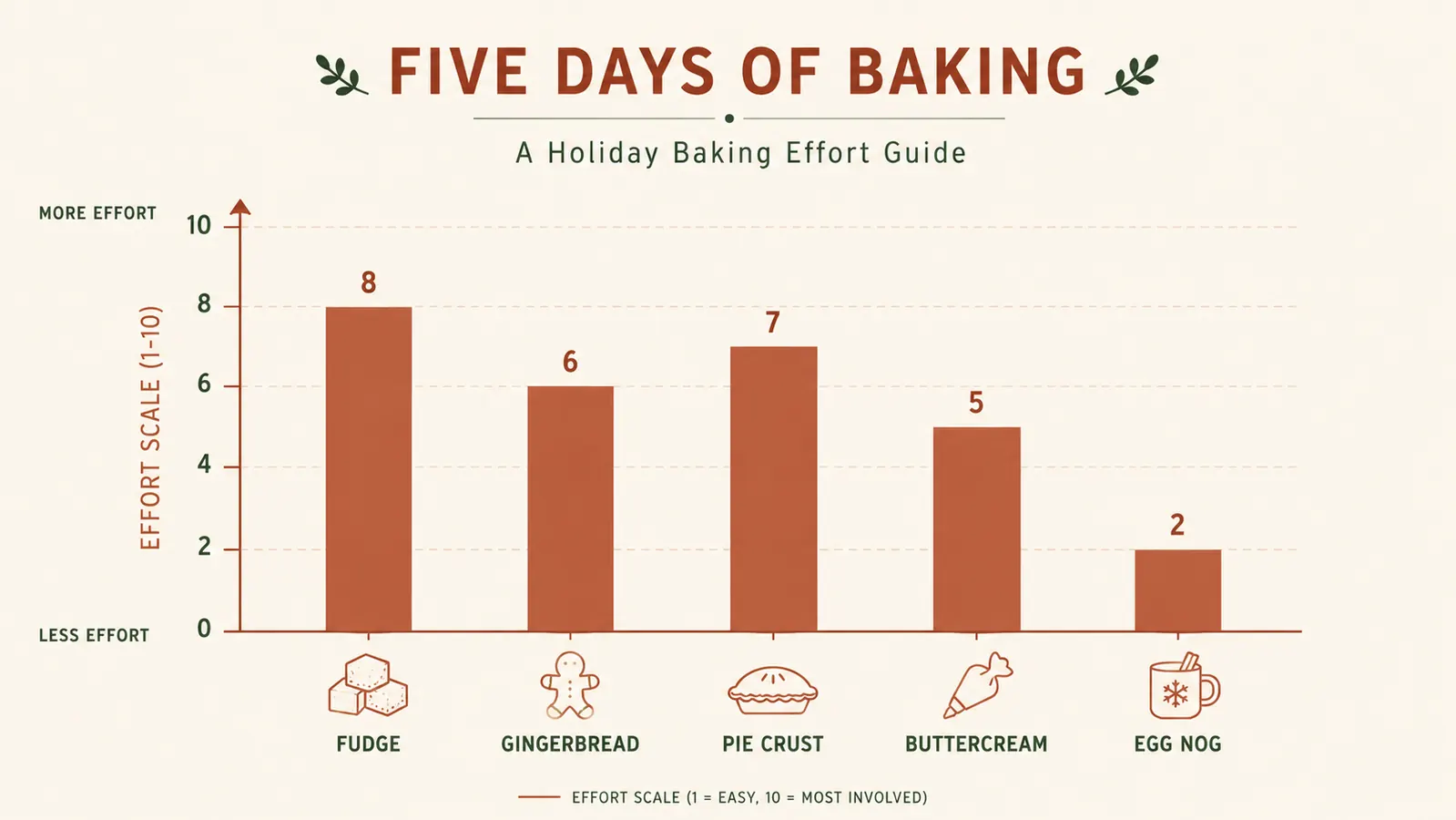
I didn't set out to write a stress test. I just baked the way I always bake for the holidays, and kept a little notepad on the counter because I had a hunch this article would come out of it. Over five consecutive days last December, I made: a double batch of peanut butter fudge, three dozen gingerbread cookies split across two days, two pie crusts using the beaters instead of a pastry cutter, a full batch of cream cheese buttercream for a yule log cake, and a batch of egg nog whipped with raw egg whites folded in separately.
That's not a normal week for most people. It's close to a normal week for me during the holidays, and it's exactly the kind of use that separates a mixer that's fine for the demo video from one that's fine for real life. I also kept using the Hamilton Beach the normal way for the two months after, weeknight cookies, a birthday cake, the usual, so this isn't just a one-week snapshot. It's what the mixer looks like under pressure and what it looks like once things calmed back down.
The Thing Nobody Warns You About: Motor Heat
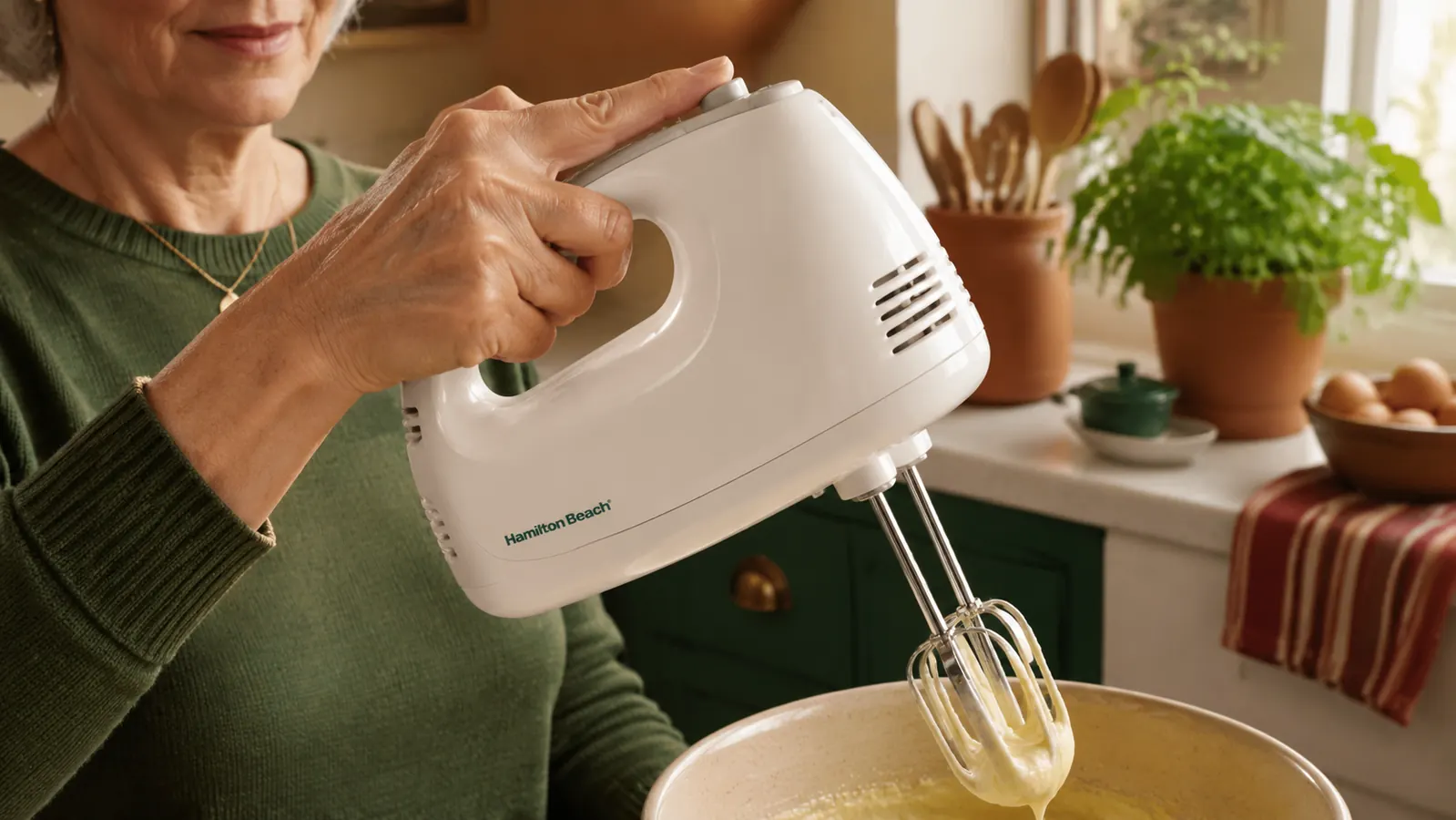
On day three, mixing my second pie crust of the afternoon right after the buttercream, I noticed the body of the mixer was warm to the touch, not hot, but noticeably warmer than it had ever felt before. That gave me pause. I set it down, let it rest for about fifteen minutes, and it was back to normal by the time I picked it back up. It never shut off or smelled hot, and it's never happened since on a single normal baking day. But if you're planning to run this thing for hours at a stretch without breaks, like I did that week, budget in some rest time. This is a 250-watt motor in a compact housing, not a commercial mixer, and it behaves like exactly that under sustained heavy use.
I mention this specifically because I couldn't find a single other review that talked about it. Most reviews are written after someone uses a mixer for one or two recipes, takes some photos, and calls it done. Nobody bakes five days straight and writes it down. I did, so now you know what to expect if your holiday baking looks anything like mine.
The Eject Button Is Genius and Also a Little Bit Not
I love the one-button beater eject. I said so in another review I wrote about this mixer, and I stand by it, no more prying sticky beaters out by hand. What I didn't fully appreciate until this stress-test week is that if you press it while the beaters are still coated in something thick, like cream cheese buttercream, they can drop with a bit of force and fling a small amount of frosting wherever they land. I ended up with a small dot of frosting on my kitchen window on day four. Wipe the beaters with a spatula first, or hold a bowl underneath when you eject. Small thing, but it's the kind of detail that never makes it into a glowing five-star review.
It's not a complaint so much as a heads-up. Once you know the button releases with some spring behind it, you adjust in about two seconds and never think about it again. I just wish the manual had mentioned it, because my first frosting-flinging incident caught me completely off guard.
Pie Crust: Where I Actually Disagree With Some Other Reviews
A lot of what you'll read about this mixer says it handles pie crust fine. I want to push back a little. It does work, technically, but I don't think a hand mixer is really the right tool for cutting cold butter into flour, and using this one for it taught me why bakers use a pastry cutter or food processor for a reason. The beaters tend to push the butter and flour up and out of the bowl rather than cutting through it cleanly, and I had to stop twice on each crust to scrape the sides and re-center the mixture. It got the job done, and the crust turned out fine once baked, but it took longer and made more of a mess than doing it the traditional way would have.
If pie crust is a big part of your baking, this mixer will work in a pinch, but don't expect it to replace a pastry cutter. I kept mine for the second crust just to confirm it wasn't a fluke, and the result was the same both times, flour dusted a little further across the counter than I'd like, and a crust that needed an extra few minutes of chilling before it rolled out cleanly.
Egg Whites: The One Task It Genuinely Struggled With
For the egg nog, I needed stiff peaks from raw egg whites, which is a slightly different animal than whipping cream. On speed 6, the highest setting, it took just over five minutes to get there, and I noticed real strain in my wrist by the end, more than with anything else I made that week. The motor itself didn't complain, but I did. If meringues or angel food cake are a regular thing for you, and you're whipping whites often, this is worth knowing going in. It's not that the mixer can't do it. It's that it takes real time and real effort on your end, standing there holding a running mixer over a bowl for five straight minutes. That's the honest tradeoff of a hand mixer versus a stand mixer with a whisk attachment that can run hands-free while you do something else.
I've since read that this is fairly normal for hand mixers in general, not a flaw specific to this one, but I'd rather you hear it from someone who actually timed it with a kitchen clock than assume it from a spec sheet. Five minutes of standing there holding a mixer overhead adds up, especially if your hands tire easily the way mine sometimes do by evening.
The Speed Dial Quirk
Here's something small that took me a few weeks to notice. The speed dial has six numbered settings plus off, and the detents between speeds 2 and 3 are close enough together that I've bumped from 2 to 4 by accident a couple of times when I meant to nudge up just one level, usually resulting in a small splatter of whatever I was mixing. It's not a design flaw exactly, more a quirk you learn to work around once you know it's there. I now start every new bowl on speed 1 and work my way up slowly rather than guessing where I'll land.
Where This Mixer Genuinely Surprised Me, In a Good Way
The fudge. I didn't expect a hand mixer to handle peanut butter fudge well at all, since that mixture gets thick and sticky fast as it cools slightly before you pour it into the pan. I braced myself for the motor to bog down. It didn't. On QuickBurst it powered through a double batch without slowing, and cleanup was easier than I expected too, since the beaters came out of the dishwasher without a trace of stuck sugar.
The other pleasant surprise was the gingerbread dough, which is stiffer than a regular cookie dough because of the molasses and lower fat content. I made three dozen cookies across two batches on two different days, and the mixer handled both without the straining sound I remembered from my old backup mixer years ago. That one held up better than I expected going into this week, and honestly it earned back some of the trust the pie crust experience had cost it.
What the Snap Case Doesn't Tell You
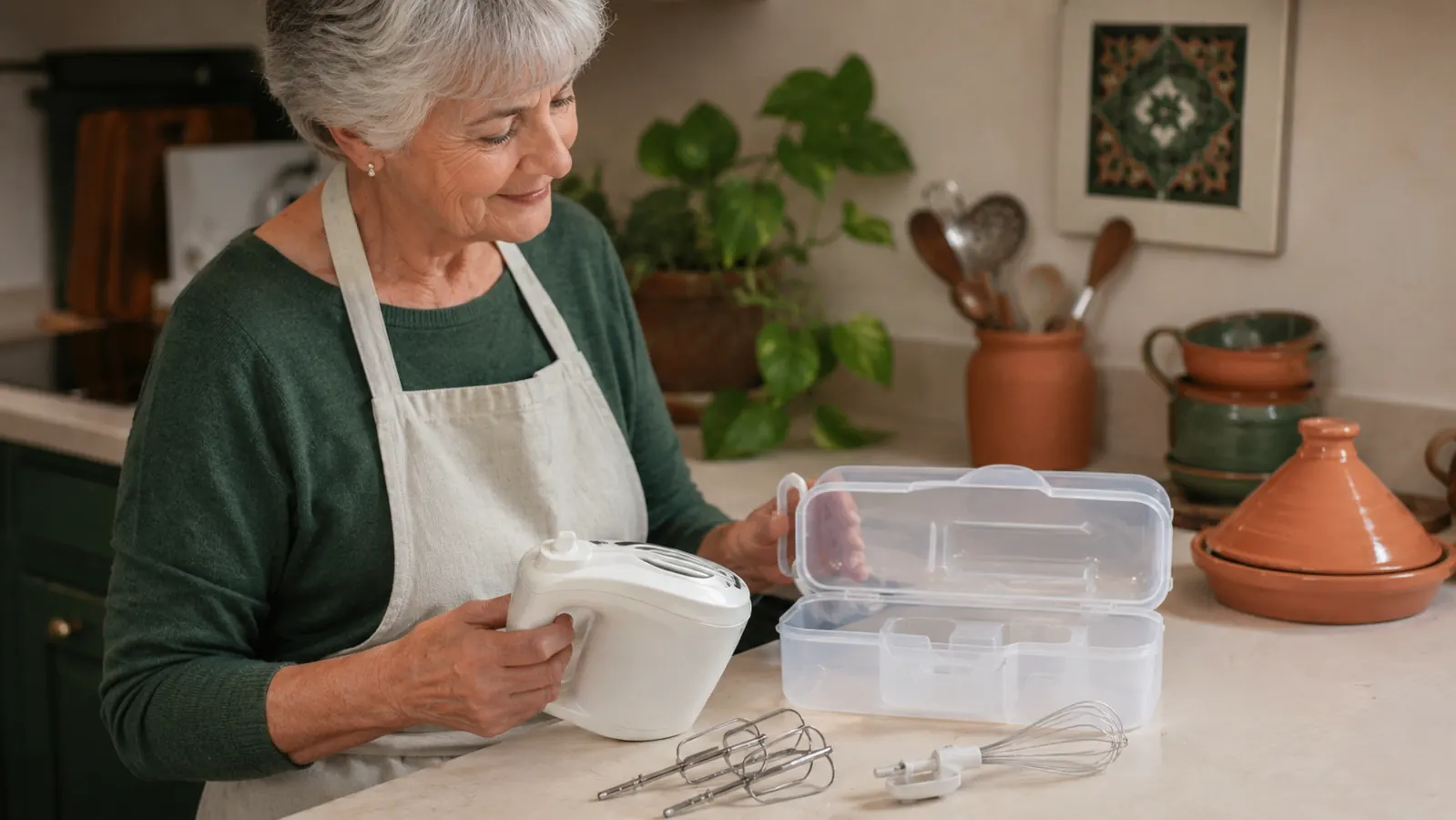
The storage case is genuinely one of the best things about this mixer, and I've praised it before. What I hadn't mentioned is that if you put the beaters away even slightly damp after a quick hand rinse instead of a full dishwasher cycle, the inside of the case can hold onto a faint smell after a few days, especially if you were mixing something with vanilla or citrus zest. It's not mold, it's not a hygiene issue, just a mild lingering scent. I now make sure everything is fully dry before it goes back in the case, and the problem hasn't come back.
It's a small thing, but it's exactly the kind of detail I wish someone had told me before I owned one, instead of finding it out myself three weeks in when I opened the drawer and got a faint whiff of orange zest from a cake I'd made the previous weekend.
The Splatter Guard Nobody Mentions Doesn't Exist
This mixer doesn't come with any kind of splatter guard or shield, which I didn't think twice about until I was creaming butter and sugar on QuickBurst in a bowl that was slightly too shallow. A fine dusting of sugar ended up on the counter, my sleeve, and once, memorably, in my coffee cup sitting a foot away. None of the marketing photos show this because they're all shot with a deep bowl and a slow speed. In real use, with a shallow bowl or a higher speed, you will get some splatter. I've since switched to a taller mixing bowl for anything on QuickBurst or speed 5 and above, and it solved the problem completely, but it took me a few messy mornings to figure that out on my own.
I bring this up because it's exactly the kind of practical detail that separates a review written after a single test bake from one written by someone who's used the thing enough times to know its habits. Bowl choice matters more with the Hamilton Beach than it ever did with my old stand mixer, which had a fitted bowl and a built-in shield. Here, that's on you to figure out, so I'm saving you the coffee cup incident.
What I Liked
- Powered through five straight days of heavy holiday baking without failing
- Handled thick fudge and stiff gingerbread dough better than expected
- One-button beater eject is a real time-saver once you know to angle it
- Snap case genuinely keeps things organized if you dry everything first
- Held up across two holiday seasons of hard use, not just light weekly baking
Where It Falls Short
- Motor runs noticeably warm during hours of continuous, back-to-back use
- Not the right tool for cutting butter into pie crust, despite what some reviews claim
- Whipping raw egg whites to stiff peaks takes real time and real arm effort
- Speed dial detents between 2 and 3 are close enough to bump past by accident
- Case can hold a faint scent if attachments aren't fully dry before storage
A gentle once-a-week review would have told you this mixer is great. Five days of holiday baking told me where it actually bends.
Who This Is For
If your baking looks like mine most of the year, cookies, cakes, frosting, whipped cream, the occasional pie, this mixer earns its keep many times over, and it will surprise you in the good moments the way the fudge and gingerbread surprised me. It's also a smart pick if you know you'll occasionally push it hard, like a holiday week or a bake sale weekend, as long as you build in short rest breaks and don't expect it to run for hours without a pause.
It's also worth it for anyone who wants an honest, no-surprises appliance rather than a flashy one. Nothing about this mixer is exciting. It just keeps doing the job, batch after batch, which after five straight days of testing is genuinely the highest compliment I can give it.
Who Should Skip It
If pie crust from scratch is a regular part of your baking routine, buy a pastry cutter or use a food processor and save this mixer for everything else. And if you're regularly whipping large batches of egg whites for meringues or angel food cakes, a stand mixer that can run hands-free while you do something else in the kitchen is going to save your wrist a lot of wear that this one won't.
I'd also say skip it if you're the type who bakes commercially or in true bulk, triple batches every day rather than the occasional heavy week I described here. That's simply outside what a 250-watt hand mixer was designed to do, no matter how well it handled my holiday stretch.
Now you know what it can survive, and what to watch for.
If you want an honest, budget-friendly mixer that can genuinely handle a heavy baking week, check today's price on the Hamilton Beach 6-Speed Hand Mixer.
Amazon Check Today's Price on Amazon →