

When my husband and I moved out of our four-bedroom house two years ago and into a two-bedroom condo with a galley kitchen, I had to make some hard calls about what stayed and what went. My stand mixer, a heavy thing I'd had for almost twenty years, went into a donation box. I cried a little, honestly. Baking was one of the few things I still did every week, and I wasn't ready to give it up just because my counter had shrunk by half.
A neighbor mentioned she'd switched to a hand mixer years ago and never looked back, so I picked up the Hamilton Beach 6-Speed Electric Hand Mixer for about $28 and figured I'd try it for a season of holiday baking. That was over a year ago now. I've made cookies for two Christmases, a dozen birthday cakes for my grandkids, more batches of whipped cream than I can count, and I still reach for this thing three or four times a week.
The Quick Verdict
A genuinely capable 250-watt mixer that handles almost everything a home baker needs, stores in a drawer instead of on a counter, and has outlasted my expectations for a $28 appliance.
Amazon Check Today's Price →Still hauling out a stand mixer for a batch of cookies?
See today's price on the Hamilton Beach 6-Speed Hand Mixer and find out why it's the only mixer I've used in over a year.
Amazon Check Today's Price on Amazon →How I've Used It
I'm not a professional baker. I'm a 66-year-old retired schoolteacher who bakes because it settles me and because my grandkids ask for cookies every time they visit. In the past thirteen months, this mixer has made: chocolate chip cookie dough (my most common use, probably twice a month), whipped cream for pies, buttercream frosting for three birthday cakes, pancake and waffle batter on weekend mornings, and mashed potatoes for two Thanksgivings, since the beaters double surprisingly well for that.
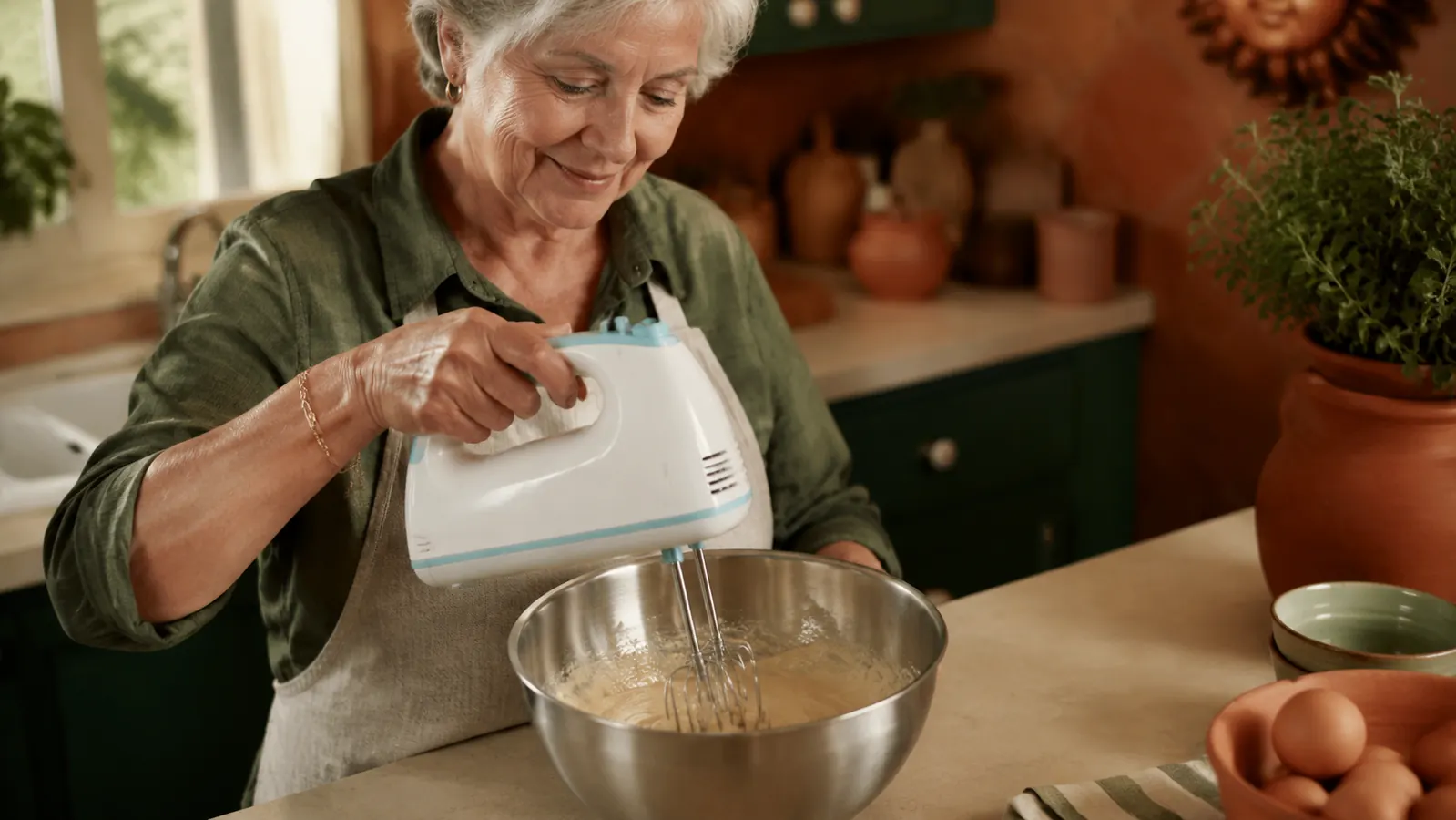
It's a 250-watt motor with six speeds plus a burst of power button called QuickBurst. For most of what I make, I live in speeds 3 through 5. I only reach for QuickBurst when I'm creaming cold butter and sugar together at the start of a cookie batch, which is the one job that used to make my old hand mixers whine and struggle.
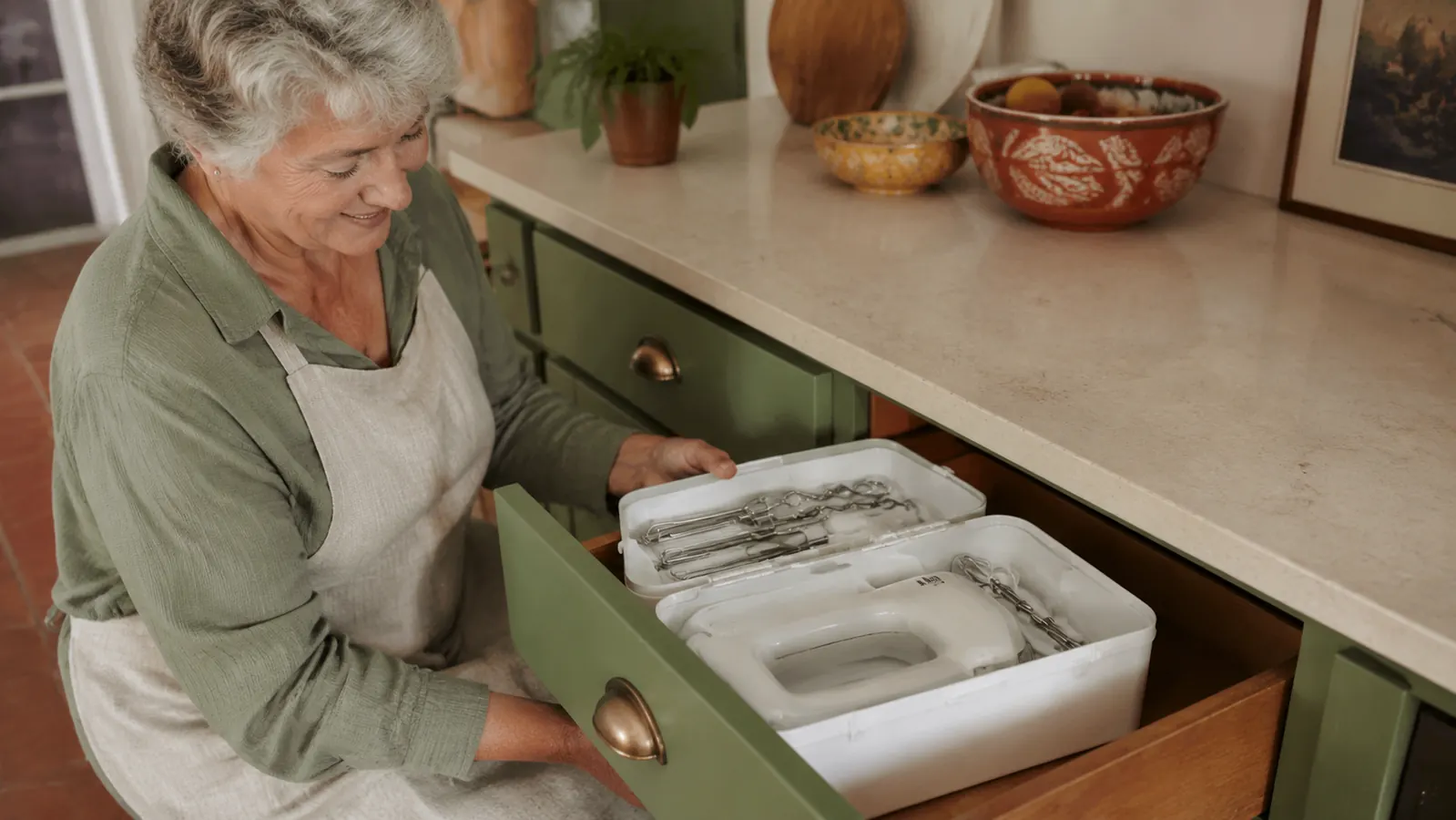
It comes with a set of traditional beaters and a whisk attachment, both of which snap into a plastic storage case that clips shut around the mixer itself. That case has genuinely changed how I store it. Instead of a mixer and a tangle of loose beaters rolling around a drawer, it's one tidy unit I can grab with one hand.
Power: Does It Actually Handle Cookie Dough
This was my biggest worry going in. My old cheap hand mixer, a $12 model I'd had for backup years earlier, used to bog down and practically stall in stiff cookie dough. I did not want to trade my stand mixer for something that couldn't finish a basic batch of chocolate chip cookies.
The Hamilton Beach handles it. Creaming a cup of cold butter with a cup and a half of sugar takes maybe 90 seconds on QuickBurst before it's light and fluffy. Once I add flour and start folding it in on speed 2, the motor keeps a steady pace without that straining sound I remember from cheaper mixers. It's not going to out-muscle a $400 stand mixer kneading bread dough, and I wouldn't try that with it. But for cookies, cakes, brownies, and frosting, which is 90 percent of what a home baker actually does, it has enough torque to get through a full batch without slowing down or overheating.
The one place I do feel the limit is with very stiff doubled batches, like when I make cookie dough for both grandkids' school bake sales at once. On a double batch I'll pause halfway through and scrape the bowl, partly to help the motor and partly because that's just good baking practice anyway.
I also tested it on a batch of oatmeal raisin dough loaded with dried fruit, which tends to be heavier and grabbier than a plain chocolate chip dough. It slowed slightly as the beaters worked around the raisins, but it pushed through without the motor cutting out or the case getting hot to the touch, which is more than I can say for the backup mixer it replaced.
Storage: The Real Reason I Switched
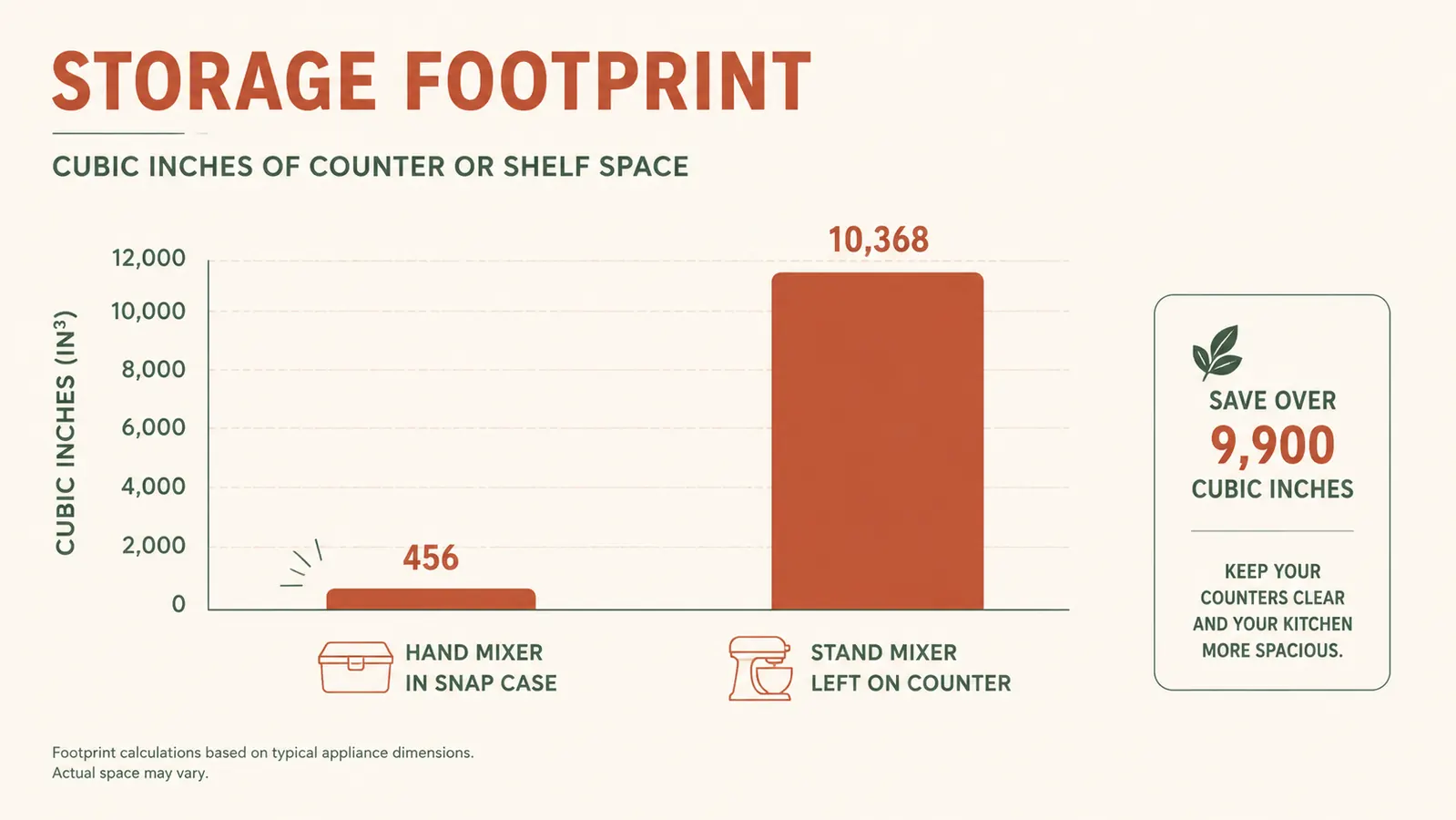
My stand mixer weighed close to 20 pounds and needed roughly a foot and a half of counter space, permanently, because lifting it in and out of a cabinet every time defeated the point of owning it. In my old kitchen that was fine. In my current galley kitchen, that's my entire counter next to the stove.
The Hamilton Beach, beaters and whisk included, tucks into its snap case at about the size of a large hardcover book. It lives in the second drawer under my counter, next to my measuring cups. When I need it, it takes maybe four seconds to grab and click the beaters in. When I'm done, it goes right back. I genuinely believe this convenience is the reason I bake more often now than I did in my old, bigger kitchen. There's no mental hurdle of hauling out a heavy appliance.
Before I settled on this one, I did look at a couple of other compact options, including a cordless hand mixer that ran on a rechargeable battery. It seemed clever in the store, but reviews mentioned the battery losing power partway through a batch, which sounded like exactly the kind of headache I didn't want mid-recipe. A corded mixer with real power behind it, that I could keep for years, felt like the safer bet, and a year later I still think it was.
Whipped Cream and Egg Whites
This is where a hand mixer earns its keep versus doing it by hand with a whisk, which I did for about a decade before finally admitting my wrist wasn't up for it anymore. On speed 4, a cup of cold heavy cream reaches soft peaks in about a minute and a half, stiff peaks closer to two and a half minutes. I've made whipped cream for pie topping at least twenty times this past year and it has never once given me grainy or over-whipped cream, as long as I watch it in the last thirty seconds like the instructions say.
Egg whites for a meringue take a bit longer, closer to four minutes to get to stiff, glossy peaks, but that's normal for any hand mixer and comparable to what my old stand mixer did on a similar speed.
Cleanup and Everyday Practicality
The beaters and whisk are dishwasher safe, which matters more to me now than it used to. I rinse them and set them in the top rack, and they come out spotless every time. The body of the mixer itself just needs a wipe with a damp cloth since it shouldn't be submerged, and the smooth plastic housing doesn't seem to trap batter in seams the way some cheaper mixers do.
Cord length is about four feet, which has been fine at my main counter outlet, but I did have to move my mixing station once when I was working closer to the sink and ran short. It's a minor annoyance, not a dealbreaker, but worth knowing if your kitchen outlets are spread out.
Durability is really the question that matters most a year in, and this is where I've been most pleasantly surprised. I use this mixer at least once a week, sometimes more during the holidays, and the motor hasn't slowed, the speed dial hasn't loosened, and the case still snaps shut as firmly as it did the day I bought it. For a 8 appliance, that's more than I expected, and it's why I haven't gone looking for anything else since.
Noise and Comfort During Long Sessions
It's not silent. On the higher speeds it has a noticeable whir, loud enough that I turn down the kitchen radio when I use it. But it's not shrill or unpleasant, more like a low hum than a screech, and my Yorkies, Biscuit and Max, don't even lift their heads from their beds anymore when I turn it on.
As for comfort, the handle has a soft-touch grip that I appreciate more now than I did at 45. I have mild arthritis in my right hand, and after a solid five minutes of mixing, my hand does start to feel it, mostly from holding the trigger steady rather than any real vibration from the motor. For a normal batch of cookies or a bowl of frosting, that's a non-issue. For a long session making multiple batches back to back, I do take a short break partway through.
One small thing I appreciate that I didn't expect to care about: the beaters eject with a single button on top instead of me having to pry them out by hand while batter drips everywhere. It sounds minor until you've done it the other way for twenty years like I had.
What I Liked
- Handles cookie dough and frosting without bogging down
- Snap-on case makes drawer storage genuinely practical
- Six speeds plus QuickBurst covers nearly everything I bake
- Comfortable grip, not too heavy for extended use
- Held up over a full year of regular use without issue
- One-button beater eject keeps cleanup simple
- Beaters and whisk are dishwasher safe
Where It Falls Short
- Not built for bread dough or very large double batches
- No storage for extra attachments beyond beaters and whisk
- Cord is a bit short if your outlet is far from the counter
- Gets loud enough on high speed that I turn down the radio
I didn't expect a $28 mixer to make me forget I ever owned a stand mixer, but a year in, that's exactly what happened.
Who This Is For
If you're in a small kitchen, an apartment, a condo, or just a house where counter space is at a premium, and you bake regularly but not commercially, this is a smart trade. It's also a solid pick for anyone who bakes occasionally and doesn't want to store a bulky appliance for the six days a month it actually gets used. My daughter, who lives in a one-bedroom apartment and bakes maybe twice a month, bought one after using mine at my place over the holidays.
It's also a good fit if you're downsizing later in life, like I was. Nobody warns you how many decisions like this come with a smaller kitchen, and honestly, this was one of the easier ones. I didn't lose anything I actually needed. I just lost the bulk.
And if you're someone who bakes seasonally rather than every week, say a handful of pies at Thanksgiving and cookies at Christmas, this makes even more sense than it does for me. Why give a stand mixer permanent real estate on your counter for a tool you touch four times a year, when this one lives quietly in a drawer until you need it.
Who Should Skip It
If you bake bread regularly, knead heavy doughs, or make large batches for a side business or big family gatherings every week, you'll hit this mixer's limits fairly fast and a stand mixer with a dough hook is the better long-term tool. It's also not the right pick if you need to walk away from the bowl while it mixes, since a hand mixer obviously requires you to hold it the whole time.
A year of cookies, cakes, and whipped cream later, this is still the one I reach for.
If your kitchen doesn't have room for a stand mixer, or you just want one less bulky appliance taking up space, check today's price on the Hamilton Beach 6-Speed Hand Mixer.
Amazon Check Today's Price on Amazon →