
Everyone who reviews the George Foreman GR10B seems to be having the best week of their life. Five stars, life changed, never going back to a skillet. I've had mine for a year now and I like it plenty, but I want to tell you the parts that don't show up in those reviews, because a few of them would have changed how I shopped if I'd known ahead of time.
I'm Robin. I cook mostly for myself these days in a kitchen about a third the size of the one I used to have, and this little grill has become part of my routine. But routine isn't the same as perfect, and I think a $27.99 appliance deserves an honest accounting rather than a cheerleading session. So here's what nobody tells you before you buy the GR10B.
The Quick Verdict
Solid for what it is: fast, cheap, and good within a narrow lane of thin cuts for one or two people. The thickness ceiling, small drip tray, and fading nonstick surface are the real tradeoffs nobody mentions upfront.
Amazon Check Today's Price →Before the honest list, here's what you're actually buying.
The GR10B is a 7.3 by 5.6 inch two-plate grill with a floating hinge, built for one or two servings at a time. It's not fancy and it doesn't pretend to be. Check today's price on Amazon and read the rest of this before you decide.
Amazon Check Today's Price on Amazon →How I Tested It
I didn't set out to write a review when I bought this George Foreman. I set out to feed myself dinner without dirtying a pan. But somewhere around month four I started paying closer attention, mostly because a neighbor asked me if it was worth buying for her own smaller apartment, and I realized I didn't have a straight answer yet. So for the back half of the year I kept rough notes, cook times, what stuck to the plates, what the grill handled well and what it fought me on.
That means this isn't a two-week impression written right after unboxing. It's a full year of actual weeknight use, including the weeks I was lazy about wiping it down right away and the weeks I pushed it harder than a normal person probably would, three nights in a row of thick pork chops just to see what would happen.
What follows isn't a list of problems dressed up to look balanced. Some of it is genuinely just information the marketing photos don't show you.
The Thickness Ceiling Is Real, and It's Lower Than You'd Guess
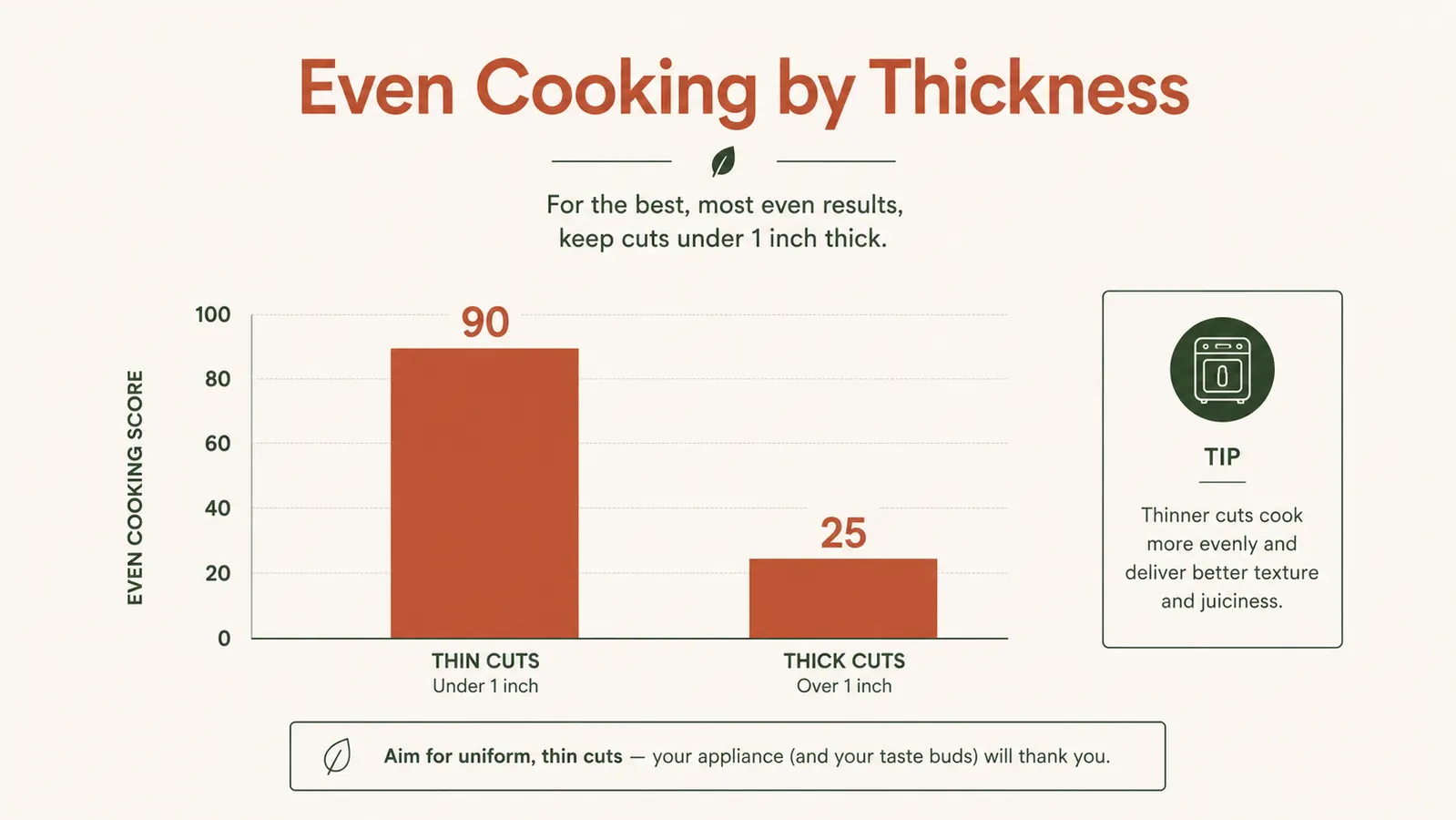
This is the single biggest thing I wish someone had told me plainly before I bought it. The GR10B has a floating hinge, which means the top plate can tilt to match whatever you put underneath it, and that sounds like it should handle anything. It doesn't. Once you're past about an inch of thickness, the plate simply can't close far enough to make solid contact across the whole surface. You get a good sear where it does touch and a pale, half-cooked patch in the middle where it doesn't.
I found this out the hard way with a bone-in pork chop early on, one that looked completely fine from the outside and turned out raw near the bone when I cut into it. Nothing dangerous happened, I caught it before eating it, but it rattled my confidence in the thing for a couple of weeks. Now I either pound thicker cuts down with a mallet first or I don't buy them at all when I know dinner is going on this grill. That's a real adjustment to how you shop and prep, not a minor footnote.
The Drip Tray Catches Less Than You'd Expect
The sloped plates do drain grease, that part is true and it works. What the product photos don't really convey is how small that little front tray actually is, and how often you need to check it if you're cooking anything fattier than a chicken breast. A couple of pork chops back to back and it's closer to full than I'd like. I've had it nearly overflow onto the counter once, caught it just in time, and now I check it between cooks out of habit rather than assuming it'll hold a whole meal's worth of runoff.
It's not a design flaw exactly, it's just undersized for how small the whole unit is. A bigger tray would mean a bigger footprint, and the whole appeal of this grill is that it isn't a bigger footprint. So it's a tradeoff, but it's one worth knowing about rather than discovering with grease dripping toward your outlet.
The Plates Don't Come Off, and That Changes the Cleaning Math
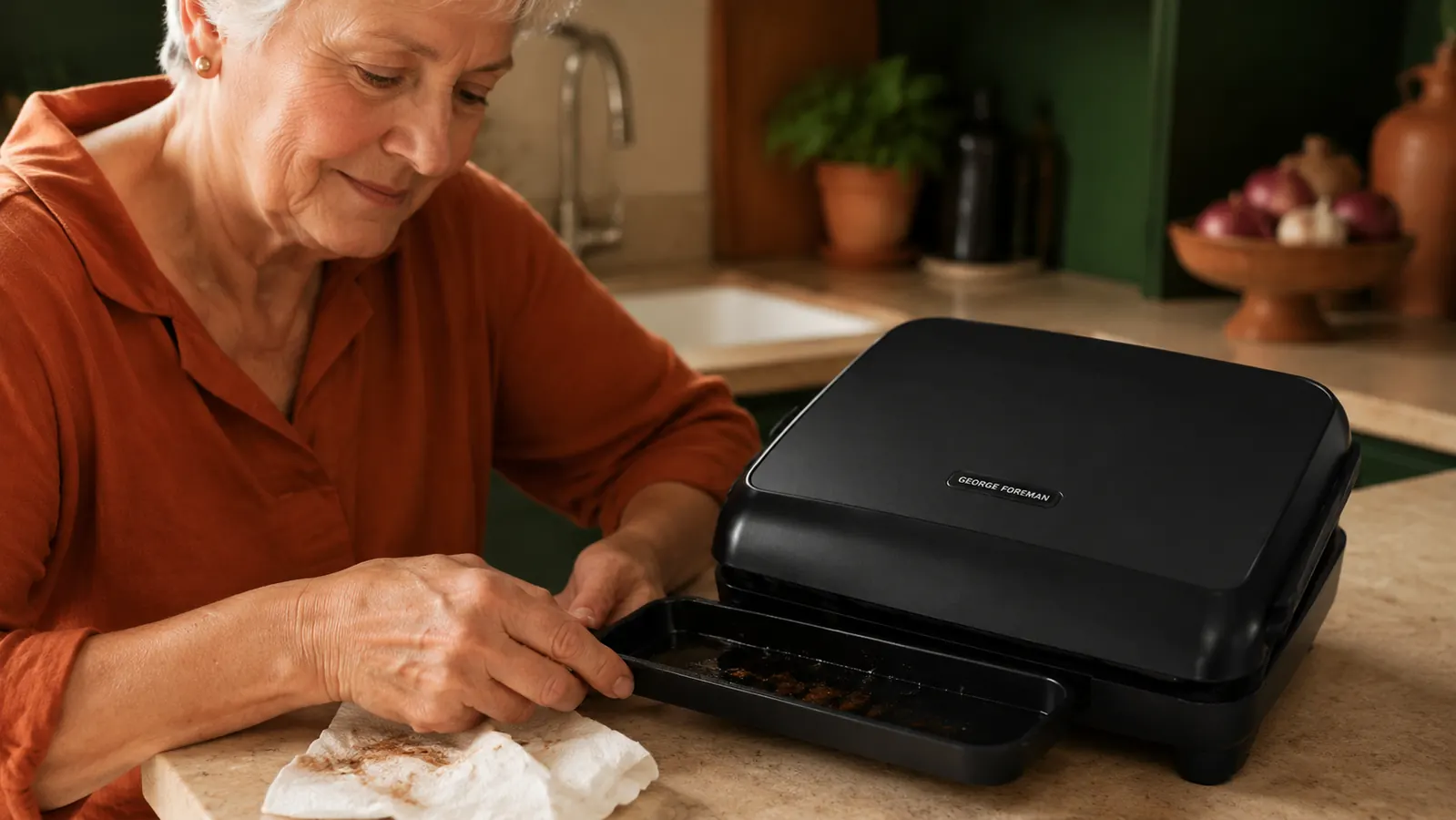
I want to be direct about this because I see it glossed over constantly. The cooking plates on the GR10B are fixed in place. You are not popping them out and running them under the faucet or setting them in the dishwasher. You're wiping them down in place, in the unit, while it's still warm or after it's cooled, with a damp cloth or a paper towel.
Most nights that's genuinely fine, honestly it's fast. But when something really sticks, a sugary barbecue glaze, cheese that oozed out of a sandwich and hardened onto the ridges, cleaning in place is more annoying than it would be if you could just lift the plate out. I've had to let the unit sit with a damp towel draped over the plate for ten minutes to loosen a stuck spot before I could wipe it clean, and that's ten minutes I wasn't expecting to spend on a grill that's supposed to be the fast, low-effort option.
The Nonstick Surface Has a Shelf Life
Every nonstick coating wears eventually, that's not unique to this grill, but I think people buying their first countertop grill don't always expect it to happen this soon. By around month six of near-daily use, I noticed eggs and thinner cuts of fish needed a light spray of oil to release cleanly where they used to just slide right off. It's not ruined, it still cooks fine, but the effortless nonstick performance from the first couple of months isn't permanent, and if you're the type who never uses oil out of principle, you'll notice this sooner than you'd like.
It Runs Hotter on One Side Than the Other
This one surprised me and I haven't seen anyone else mention it. On my unit, the back corner nearest the hinge cooks slightly hotter and faster than the front corner. It's subtle, maybe fifteen or twenty seconds of difference on a six-minute cook, but if you're doing two pieces of chicken side by side and want them to finish together, you'll notice one side is a touch further along. I've started rotating whatever I'm cooking about halfway through if I want an even result across two portions, which isn't hard, just something the instructions never mention.
The Smell Lingers Longer Than You'd Think
Nobody mentions this and it surprised me the first month. Because there's no vent hood over my counter the way there was in my old kitchen, cooking anything with a strong marinade, teriyaki especially, leaves a smell hanging in the apartment for a good while after dinner is done. It's not bad exactly, but it's noticeable in a way a stovetop with a working exhaust fan wouldn't be. I've started cracking a window when I know dinner is going to be something pungent, and I run a small fan on the counter nearby if I'm cooking fish. Worth knowing if your kitchen is as closed off as mine.
The First Few Cooks Are Rougher Than the Rest
This one isn't in the manual either. My first two or three meals on the GR10B stuck more than anything I've cooked on it since, even though I wiped the plates down and technically didn't need to season them the way you would cast iron. It seems like the nonstick surface needs a little breaking in, or maybe I was just being overly careful with the oil at first because I didn't trust it yet. Either way, if your first attempt at chicken sticks a little and you're tempted to return the thing, give it a few more tries before you decide. Mine smoothed out noticeably by the second week.
The Indicator Light Isn't as Useful as It Sounds
There's a light on the front that's supposed to tell you when it's up to temperature, and technically it does, but I stopped trusting it as my only cue somewhere around month three. It stays lit the whole time it's plugged in on some units, mine included, rather than switching off cleanly once it's ready the way I expected from the description. I've learned to just count roughly three minutes from plugging it in rather than watching the light, and that's been far more reliable. Small thing, but if you're the type who likes a clear signal before you start cooking, don't lean on it the way the box implies you can.

Storage Is Easier Than Advertised, Cord Included
One pleasant surprise nobody warned me about, in a good way this time. The cord is longer than I expected for something this size, and it wraps neatly around two small tabs molded into the base, so it doesn't end up as a loose tangle in the cabinet if you do decide to store it rather than leave it out. I mention this because I've owned other compact appliances where the cord situation was an afterthought, shoved wherever it fit, and this one actually got that small detail right. If you're tight on cabinet space and plan to tuck it away between uses rather than leave it on the counter the way I do, that's one less annoyance to deal with.
What I'd Tell a First-Time Buyer
If my neighbor asked me again today whether to buy this, and she eventually did buy one after our conversation, I'd tell her exactly what I've told you here. Keep your expectations narrow and it'll meet them every time. Buy it expecting a fast, simple way to cook thin cuts and vegetables for one or two people, not a do-everything countertop workhorse, and you won't be disappointed the way some of the frustrated three-star reviews online clearly were.
I'd also tell her to keep a meat mallet in a drawer somewhere, because pounding thicker cuts down to size solves most of the unevenness problems before they start. And I'd tell her not to expect the nonstick magic of month one to last forever, because a little oil after six months isn't a defect, it's just what happens to any nonstick surface that gets used almost every day for a year.
What It's Genuinely Good At, No Asterisks
I don't want this to read as a takedown, because there's a lot here that's simply true and simply good, and it's the same reason George Foreman built its name on this style of grill in the first place. It heats up fast, usually under three minutes, and a chicken breast or a couple of burger patties come out done and evenly marked without me standing over a stove flipping anything. For someone cooking alone most nights, that speed and hands-off quality is the entire value proposition, and it delivers on that consistently.
The floating hinge, thickness ceiling aside, does a genuinely good job pressing evenly on cuts that fall within its range, which is most weeknight proteins. And the price is honest. It's not trying to be a $150 appliance dressed up with extra features you'll never use. It does one thing, a fairly narrow range of grilling for one or two people, and it does that one thing well.
What I Liked
- Heats up in under three minutes, every time
- Genuinely fast for weeknight proteins under an inch thick
- Honest, low price with no gimmick features
- Compact enough to store or leave out without regret
- Vegetables and thin cuts come out evenly cooked with real char
Where It Falls Short
- Anything over an inch thick cooks unevenly, sometimes undercooked in the center
- Drip tray is small and needs checking between cooks with fattier food
- Plates are fixed in place, not dishwasher-safe or removable
- Nonstick performance fades noticeably by month five or six
- Slight uneven heat between the hinge side and the front
The glowing reviews aren't lying, they're just not telling you the whole thing. This grill does its job well within a narrow lane. The trouble starts when you expect it to do more than that.
Who This Is For
If you're realistic about what a compact grill can do, cooking mostly for one or two, mostly with cuts under an inch thick, and you're willing to check a small drip tray and wipe plates in place rather than pop them into a dishwasher, this is a smart, low-cost purchase. It rewards people who adjust their cooking habits slightly to fit the tool instead of expecting the tool to stretch to fit every habit they already had with a bigger stove.
Who Should Skip It
If you regularly cook thick bone-in cuts, want dishwasher-safe plates, or you're feeding more than two people most nights, you're going to run into the exact limitations I've described above, repeatedly, and it'll wear on you faster than it wore on me. There are larger George Foreman models built for bigger households, and if a smooth cleanup with removable plates matters more to you than counter space, that's worth paying a bit more for upfront rather than fighting this one's limits for a year like some reviewers quietly end up doing.
Now you know what the five-star reviews leave out. Here's the honest bottom line.
Within its lane, one or two servings, cuts under an inch thick, the GR10B genuinely delivers. Check today's price on Amazon and decide with the full picture, not just the highlight reel.
Amazon Check Today's Price on Amazon →