
Short answer, since I know some of you just want the verdict before you scroll: if you're cooking for one or two people in a kitchen with limited counter space, the George Foreman GR10B mini grill wins. It's a fraction of the size of my old panini press, it does more than just paninis, and it costs less than a third of the price. The dedicated panini press still has a place, but only if you've got the room and you make sandwiches more often than you grill anything else.
I went back and forth on this for months before I actually tested them side by side in my own kitchen. I'd had a full-size panini press for years, a hand-me-down from my daughter when she upgraded hers. It made a genuinely great panini, no complaints there. But when I downsized from a house to a two-bedroom condo, that press did not make the cut for counter space. I replaced it with the George Foreman GR10B, mostly out of necessity, and I've now used both enough, over enough weeks and enough dinners, to tell you exactly where each one earns its keep and where it falls short.
| George Foreman Mini Grill | a Dedicated Panini Press | |
|---|---|---|
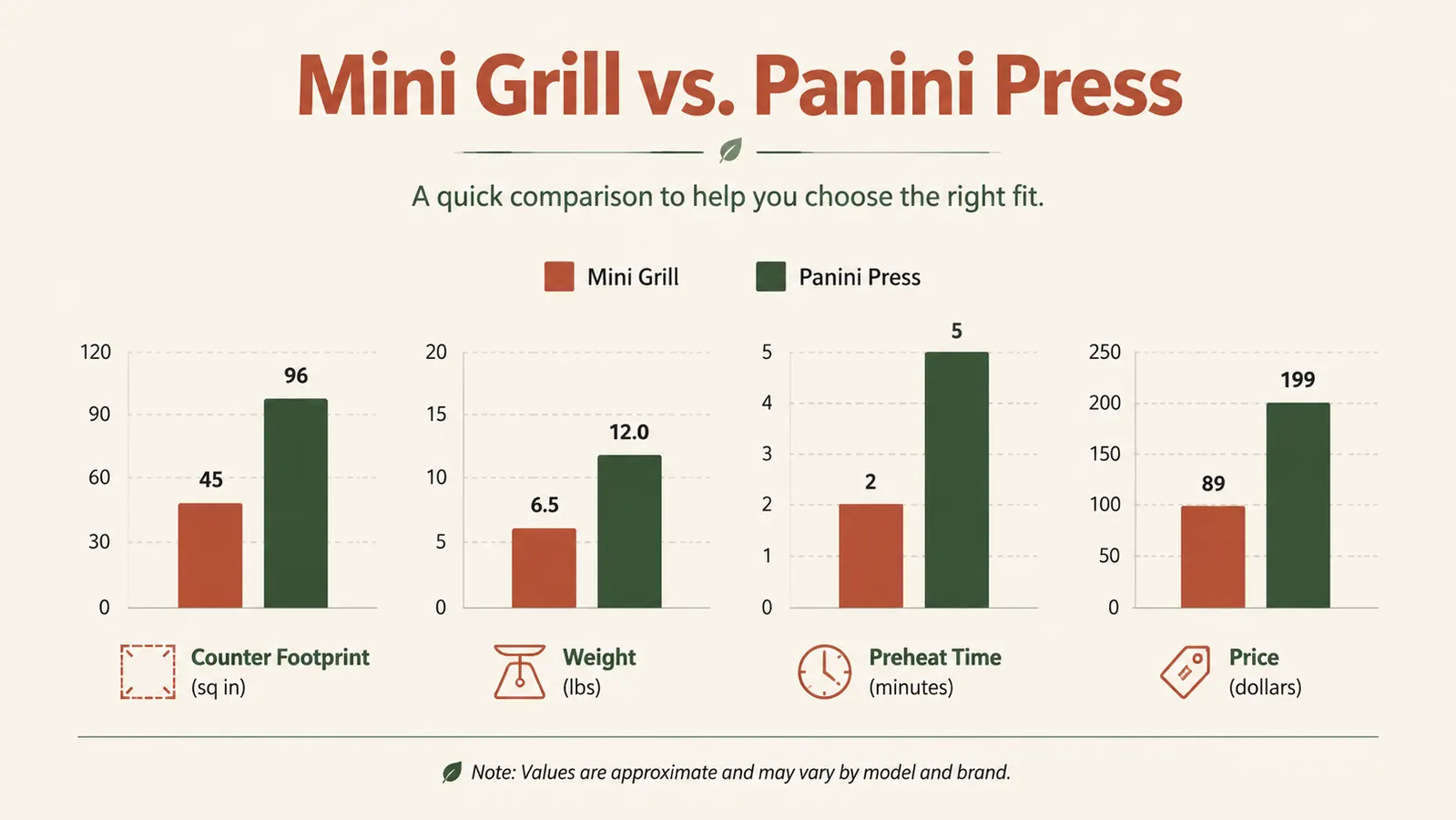
| Price | $27.99 | $89 to $130 |
| Footprint (closed) | 7.3 in x 5.6 in cooking surface, about the size of a hardcover book | 13 in x 11 in cooking surface, roughly a full placemat |
| Weight | About 4 lbs | 10 to 14 lbs |
| Preheat time | 3 to 5 minutes | 6 to 10 minutes |
| Servings per batch | 1 to 2 | 2 to 4 |
| Plate material | Fixed nonstick grill plates, not removable | Often removable, dishwasher-safe plates |
| Versatility | Grills, presses, and doubles as a mini griddle for eggs and bacon | Built almost exclusively for pressed sandwiches |
| Storage | Stands upright in a cabinet slot or fits in a drawer | Needs a dedicated shelf or counter spot, too heavy to store vertically for most |
| Warranty | 1 year limited (George Foreman standard) | Varies, often 1 to 3 years depending on brand |
Where the George Foreman Mini Grill Wins
The biggest thing you notice with the GR10B is how little space it actually takes. My cooking surface is 7.3 by 5.6 inches, which sounds small until you remember I'm usually cooking for one, sometimes two. It slides into the gap between my toaster oven and the wall, standing on its edge, and I don't think about it again until I need it. My old panini press needed its own shelf in the pantry because it was too heavy and too wide to store on its side without me worrying about the hinge cracking. When you're working with a galley kitchen or a condo counter that's already crowded with a coffee maker and a knife block, four extra pounds of appliance that has to live flat on a surface is a bigger deal than it sounds like on paper.
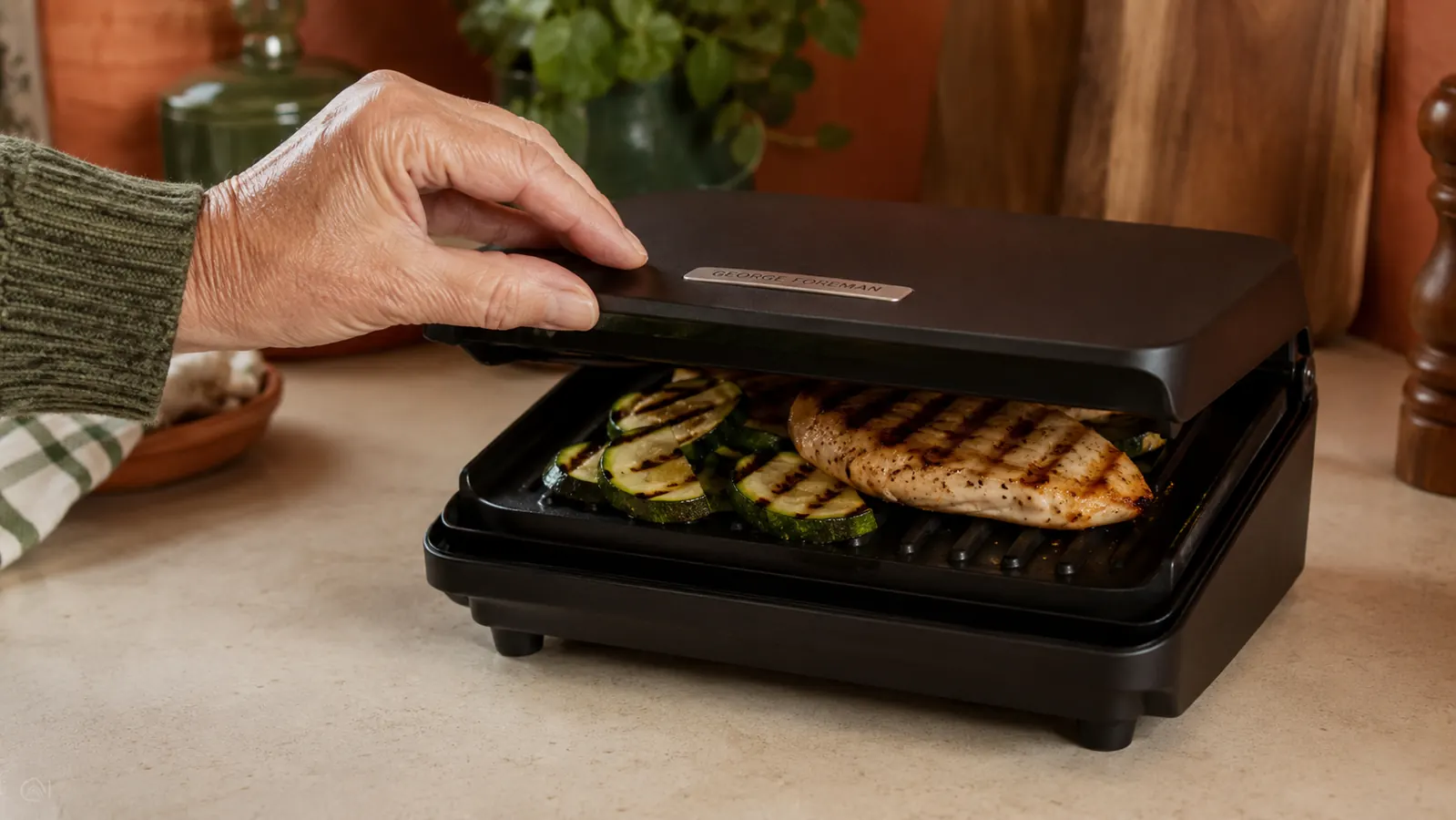
The other thing that won me over is that the mini grill isn't a one-trick appliance. Yes, it presses a panini just fine, bread on both sides, cheese melted through, grill marks and everything. But I also use it to grill a single chicken breast for dinner, sear a couple of turkey burgers on a weeknight, do quick vegetables like zucchini and asparagus alongside whatever protein I'm making, and even fry two eggs flat when I open the lid all the way and use it like a mini griddle. My panini press, for all its build quality, only ever made paninis. It sat idle five days out of seven, taking up space for a job it did maybe once a week. The George Foreman gets used four or five times a week because it's not limited to one job, and that changes the entire value equation for a small kitchen where every appliance has to earn its spot.
There's also the preheat time to consider, which matters more than people expect when you're cooking on a weeknight after work. The mini grill is ready in three to five minutes because there's simply less metal to heat up. The panini press, with its bigger plates, takes closer to six to ten minutes before it's actually hot enough to sear properly. On a night when I'm hungry and tired, that five-minute difference is the difference between a fast dinner and a slow one.
How the Actual Cooking Compares
Grill marks aside, the thing I actually cared about was whether the mini grill could sear as well as the bigger press. In my experience it holds its own on anything one or two servings' worth. A chicken breast comes out with real color, the outside caramelized instead of just gray and steamed, and a turkey burger gets a proper crust rather than a boiled-looking top. The sloped design drains grease off to a small tray in front, which I didn't expect from something this size, and it means my chicken isn't sitting in its own fat while it cooks.
Where the panini press pulls ahead on cooking results specifically is even heat across a bigger sandwich. Because its plates are larger and often heavier gauge metal, it holds temperature better when you load it up with a thick, cold-from-the-fridge sandwich. The mini grill can lose a little heat for the first minute or two on a really dense sandwich, though it recovers quickly. For a single sandwich or a small piece of protein, I've never noticed a meaningful difference in the finished result.
Where the Panini Press Wins
I want to be fair here because the dedicated press earns its price in specific ways. The cooking surface is close to double the size, which means you can press two full sandwiches at once, or one really oversized one loaded with peppers and onions and a thick cut of mozzarella without anything sliding out the side. When I hosted my book club and made paninis for six people, the mini grill would have meant a lot of standing around and waiting for the next batch. The bigger press got through everyone faster, and I wasn't apologizing for the wait between plates.
The removable plates matter more than I expected too. On a dedicated press, you typically pop the plates off and run them through the dishwasher, which is a real advantage if you're making sandwiches with sauces, pesto, or anything sticky that likes to bake onto a hot surface. The George Foreman's plates are fixed in place, so cleanup is always a wipe-down with a damp cloth and sometimes a little scraping at the ridges, never a dishwasher cycle. If you're someone who cooks a lot of messy, saucy sandwiches, that's a real point in the panini press's favor, and I won't pretend otherwise.
Some full-size presses also come with adjustable hinges or floating tops that let you press unevenly thick sandwiches, like a stuffed focaccia or a bagel sandwich, without crushing one side flat. The GR10B has a slight float to its lid but nowhere near the range of motion a purpose-built press offers. If panini making is genuinely your thing, the kind of hobby where you're experimenting with different breads and thicknesses regularly, that flexibility is worth paying for.
For most small kitchens, less appliance means more counter
If you're cooking for one or two and don't need to press four sandwiches at once, the George Foreman GR10B does most of what a full panini press does in a fraction of the space, at a fraction of the price.
Amazon Check Today's Price on Amazon →The Price Difference Is Bigger Than It Looks
A quality dedicated panini press runs somewhere between $89 and $130 depending on the brand and whether it has adjustable height settings for thicker sandwiches. The George Foreman GR10B sits at a current price under $30. That's not a small gap. For the cost of one panini press, you could buy the mini grill three times over and still have money left for a good loaf of bread and a block of decent cheese.
I'm not saying price should be the only factor. If you genuinely use a panini press for its intended job several times a week and you've got the counter or shelf space to spare, the bigger unit is a reasonable investment, and I understand why some cooks swear by theirs. But if you're like most people I know in smaller kitchens, that press ends up being an occasional-use appliance that eats permanent real estate for an occasional job. That math didn't work for me anymore once I moved, and it's worth doing that same math honestly before you spend the extra money.
The panini press made a better panini. The mini grill made dinner four nights a week. I know which one earned its spot.

Cleanup: A Real Difference, Not a Marketing One
This is where I'll give credit where it's due. Dedicated presses with removable plates are genuinely easier to get fully clean, especially if you're cooking something with a lot of sauce or cheese that likes to bubble over the edges and drip onto the hinge area. You take the plates off, they go in the dishwasher, and you're done thinking about it. With the George Foreman, since the plates are fixed, I let it cool for a few minutes, then wipe it down with a damp cloth or a soft brush for the ridges. It takes me about two minutes and I've never had a problem getting it clean, but if you hate hand-cleaning anything with grooves, that's worth knowing upfront before you buy either one.
What balances that out for me is how much less often I'm cleaning up a full-size appliance in the first place. Smaller cooking surface means less mess to begin with, since I'm not pressing a sandwich the size of a dinner plate loaded with three kinds of cheese. A quick wipe on the mini grill after a solo dinner takes less total time most weeks than one deep clean of the panini press's plates would, even accounting for the dishwasher doing the actual scrubbing.
Who Should Buy Which
If you live alone or cook for one to two people, have limited counter or cabinet space, and want one appliance that handles paninis, grilled proteins, and quick breakfasts, get the George Foreman mini grill. It's the practical choice for a small kitchen, and it's the one I'd tell my sister to buy if she called me asking. It does the job of three appliances in the footprint of one, and that's exactly what a downsized kitchen needs.
If you regularly cook for a family, host people for sandwich lunches, or panini making is a real weekly ritual you take seriously, and you have the space to dedicate to it, a full-size press with removable plates will serve you better. It's a specialist tool, and specialist tools are worth the money when you actually use the specialty. Buy the appliance that matches how often you'll actually reach for it, not the one that looks more impressive sitting on the counter.
See why this compact grill fits small kitchens better than a full-size press
Check the current price and availability for the George Foreman GR10B Mini Grill before you decide.
Amazon Check Today's Price on Amazon →